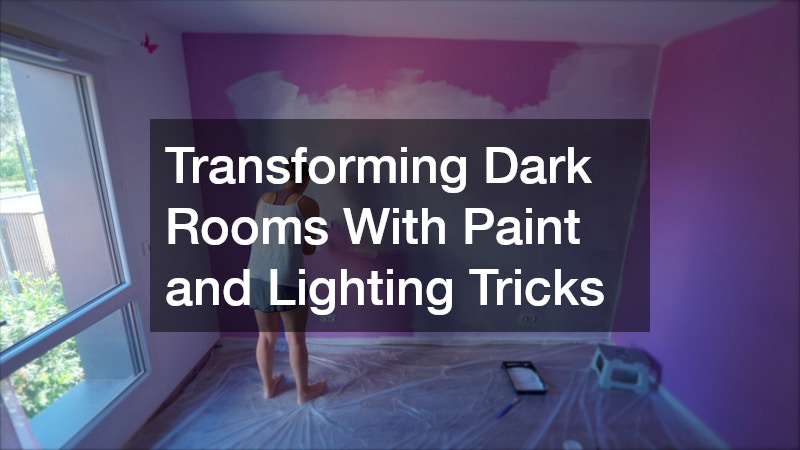
A dark room can make even a beautifully furnished home feel small, cold, and uninviting. Instead of assuming you need an expensive addition or a wall of new windows, the right combination of paint color, finish, and layered lighting can dramatically change how a space feels. This guide walks through practical, budget-friendly strategies for brightening gloomy rooms, along with a few signs that point to bigger underlying issues worth addressing first.
Choosing Wall Colors That Reflect Light
The color you put on your walls has a bigger impact on brightness than most homeowners realize. Paint isn’t just decorative—it reflects or absorbs light depending on its undertone and finish, which means the wrong choice can make a dim room feel even darker. Warm off-whites, soft creams, and pale neutrals bounce available light around a room, while cool grays and stark whites can sometimes look flat or clinical in low-light spaces. Undertones matter as much as the color itself. A cream with yellow or peach undertones tends to warm up a north-facing room that gets cool, indirect light, while a gray with blue or purple undertones can feel cold and shadowy in the same space. Shades like Benjamin Moore’s White Dove, Sherwin-Williams’ Alabaster, or a warm greige often perform well in dark rooms because they read as soft and inviting rather than sterile. Finish also plays a role: eggshell and satin finishes reflect more light than flat matte paint, without creating the glare that semi-gloss can produce on imperfect walls. Higher light reflectance value (LRV) paints, generally anything above 60, will bounce back more light than darker, low-LRV colors, so checking the LRV number on paint chips can help narrow choices quickly. Testing swatches at different times of day is essential, since a color that looks bright at noon may turn muddy by evening. Paint a sample patch at least two feet square on two or three different walls, and observe it in the morning, midday, and after sunset under artificial light. This small extra step can prevent a costly repaint down the line.
Sheen matters just as much as hue when it comes to bouncing light around a dark room. Flat paint absorbs light and can make walls look muddy or lifeless, while high-gloss finishes reflect so much light that they highlight every bump, patch, and roller mark on the wall. Eggshell and satin finishes strike a smart middle ground, reflecting enough light to brighten a space without the harsh glare or surface flaws that gloss reveals. For living rooms and bedrooms, satin is often the better choice because it holds up to occasional wiping and handles moderate humidity well. Eggshell works nicely in spaces with less traffic, like formal sitting rooms, where a slightly softer glow is more desirable than durability. If a room gets almost no natural light, consider satin on the walls and a soft gloss on the trim to create subtle contrast and extra reflectivity where it counts. Ceilings deserve their own consideration, too. A ceiling paint with a slight sheen, rather than the traditional flat white, can help redirect light downward and make a low or dark ceiling feel less oppressive.
- Stick to warm whites or light greiges for north-facing rooms, since their cool, indirect light can make crisp whites feel flat or clinical
- Avoid deep, saturated colors on all four walls in already-dim spaces; if you love a bold shade, save it for one accent wall opposite the main light source
- Test paint swatches morning, afternoon, and night before committing, painting at least a 2×2-foot patch since small chips can be deceiving
- Choose eggshell or satin sheen for better light reflection than flat paint, reserving high-gloss for trim only, as it can spotlight wall imperfections
- Look for paints with a Light Reflectance Value (LRV) of 60 or higher if the room gets minimal natural light
- Consider warming undertones like soft yellow or peach in rooms with harsh fluorescent or cool LED lighting to counteract a sterile feel
Using Ceiling and Trim Color to Add Height
Painting the ceiling a shade lighter than the walls, or matching it to a bright white, tricks the eye into perceiving more vertical space and allows light to travel upward more effectively. A good rule of thumb is to choose a ceiling color at least 50% lighter than the wall color, or to use a flat or matte white like Benjamin Moore’s Chantilly Lace or Sherwin-Williams’ Extra White, both of which reflect light without introducing a stark, clinical feel. This is especially useful in rooms with low ceilings, where a dark ceiling can make the space feel like it’s closing in. For rooms with 8-foot ceilings or lower, avoid warm off-whites with heavy yellow or beige undertones, as they can visually lower the ceiling even further. Instead, opt for cool-toned whites or soft blues, which recede visually and create the illusion of greater height. If the ceiling has crown molding, consider painting it the same white as the ceiling rather than matching it to the trim, since this creates a seamless upward sweep that draws the eye higher. Glossy white trim around windows and doors also helps reflect natural light deeper into the room. A semi-gloss or high-gloss finish works best here, since the sheen bounces both natural and artificial light rather than absorbing it the way flat finishes do. Pay particular attention to window casings and door frames, as these are often the first surfaces light hits when entering a dark room, and brightening them can noticeably amplify the overall sense of openness.
Crown molding and baseboards painted in a crisp white create subtle contrast that draws the eye upward and outward, making walls feel taller and the room feel more open. A high-gloss or semi-gloss white finish works especially well here, since the sheen catches light and emphasizes the architectural lines even in dim corners. This is a low-cost update that pairs well with any wall color you choose, whether you stick with soft neutrals or go bolder on the walls themselves. For an even stronger height illusion, consider painting the ceiling one to two shades lighter than the walls rather than defaulting to plain white. This slight color shift keeps the ceiling from visually “capping” the room and instead lets it recede, adding a sense of extra loft. If your ceilings have any decorative elements like medallions or beadboard, a lighter tone will highlight the texture without overwhelming the space. Don’t overlook the door frames and window trim while you’re at it. Painting these to match your crown molding and baseboards creates a continuous white line that frames the room and leads the eye around it, reinforcing the sense of scale. In rooms with 8-foot ceilings or lower, this trick is particularly effective, since it can visually add several inches of perceived height for very little cost—often just a quart or two of paint and a weekend afternoon.
Layering Lamps, Sconces, and Overhead Fixtures
 One overhead light rarely solves a dark room problem on its own. Layering multiple light sources at different heights, such as floor lamps, table lamps, wall sconces, and overhead fixtures, creates a more even and flattering glow throughout the space. This approach also gives you flexibility to adjust brightness depending on the time of day or activity.
Dimmer switches are worth adding to any layered lighting plan, since they let you control mood and intensity without buying new fixtures. If your home’s wiring is older or you are unsure whether your circuits can safely support additional fixtures and dimmers, it is worth having a certified electrician evaluate the room before you start drilling into walls or ceilings.
- Add at least three light sources per room for balanced coverage
- Use warm-white bulbs (2700K to 3000K) for cozy, residential spaces
- Install dimmers to adjust brightness throughout the day
- Position lamps at varying heights to avoid flat, single-source lighting
Selecting Bulbs and Color Temperature for Warmth
Not all light bulbs produce the same quality of light, and choosing the wrong color temperature can make a room feel harsh or sterile rather than warm and welcoming. Bulbs labeled 2700K to 3000K emit a soft, warm glow similar to candlelight, while bulbs above 4000K produce a cooler, bluish light better suited to garages or workspaces, which is also the range many garage door service technicians recommend for exterior fixtures near entry points, similar to the bright security lighting a fence contractor might install along a property line. Sticking with one consistent color temperature throughout a room prevents the mismatched, patchy look that comes from mixing warm and cool bulbs.
Bulb wattage and lumens also matter more than most people expect when trying to brighten a dim space. A higher lumen count, rather than just higher wattage, will give you a brighter room without necessarily increasing your energy bill.
Positioning Mirrors and Reflective Surfaces
Mirrors placed opposite windows or light fixtures can double the amount of light bouncing around a room, making them one of the most effective and inexpensive tools for brightening a space. A large mirror leaned against a wall or hung above a console table works particularly well in hallways and small living rooms that lack natural light.
Beyond mirrors, glossy or metallic finishes on furniture, picture frames, and decor accessories also help reflect light rather than absorb it. Glass-top tables, polished metal lamp bases, and lacquered furniture all contribute to a brighter overall feel without requiring any electrical or structural changes.
Refreshing Cabinets and Built-Ins for a Lighter Look

Dark wood cabinetry and built-in shelving can quietly absorb a huge amount of light in kitchens, bathrooms, and living rooms. Rather than replacing these pieces entirely, cabinet refinishing offers a more affordable way to lighten the look of a room while keeping the existing structure intact. Lighter cabinet colors paired with updated hardware can make a noticeable difference in how airy a space feels.
This approach works especially well in kitchens where dark upper cabinets make the whole room feel heavy and enclosed. Combining refinished cabinets with under-cabinet lighting adds another light source exactly where task lighting is most needed.
Addressing Window Treatments and Natural Light Access
Heavy drapes and dark blinds are common culprits behind rooms that feel perpetually dim, even during the day. Swapping to sheer curtains, or simply keeping treatments pulled back further, allows more natural light to filter in without sacrificing privacy. For rooms with limited window space, mounting curtain rods wider and higher than the window frame itself creates the illusion of a larger opening.
If natural light is limited because of overgrown trees or shrubs blocking windows, addressing the landscaping can make a bigger difference than any interior change. In cases where large branches are shading windows or an entire side of the house, contacting a tree removal service to trim back growth can restore hours of usable daylight to a room. If you notice the shade is coming from an overhanging roofline or damaged fascia rather than just trees, it may be worth having a roofing company inspect the area, since overhangs and gutter issues can also block light from reaching windows.
Considering Structural and System Upgrades for Long-Term Brightness

Sometimes a persistently dark or damp-feeling room points to issues beyond paint and lighting. Poor ventilation or an aging HVAC company visit may reveal that humidity and airflow problems are contributing to a room feeling stuffy and dim, since musty air often gets paired with heavier window treatments and darker decor choices to compensate. Improving airflow can make a room feel brighter simply because it feels fresher and more comfortable to spend time in.
For larger renovation goals, especially in multi-unit buildings, condo remodeling projects often include reconfiguring layouts to bring more natural light into interior rooms. Removing a non-structural wall or adding an interior window between rooms can transform a windowless space far more dramatically than paint alone ever could.
Maintaining a Clean and Fresh-Feeling Space

Dust, stains, and dingy carpet can make even a well-lit room look dark and tired. Scheduling regular carpet cleaning services helps restore the true color of flooring, which in turn reflects light better and contributes to a brighter overall impression. Stained or matted carpet absorbs light and visually shrinks a room, while clean, fluffed carpet fibers do the opposite.
Beyond flooring, small maintenance details throughout the home contribute to how bright and cared-for a space feels. A properly functioning plumber-installed fixture without leaks or water stains, clean windows free of grime, and dust-free light fixtures all play a supporting role in maximizing the light you already have.
Brightening a dark room rarely requires a single dramatic fix. It’s usually a combination of the right paint color, smarter lighting layers, reflective surfaces, and a bit of housekeeping that adds up to a noticeably lighter, more welcoming space. Start with the simplest changes, like paint and bulbs, before moving on to bigger structural questions, and you’ll likely find your room transformed well before you need to consider a major renovation.